October 27, 2020
One issue that marketers are always concerned about is how to get their brand's advertising message to the right audience. They use many ways to search for information and clarify the portrait of the target customer segment. However, customers are increasingly cautious about revealing information, so many advertising units (like Facebook) are also facing many problems with illegal data exploitation. On the other hand, data collected online is now not authentic (a lot of data is "junk"), so it is not easy to infer the real consumer behavior of customers.
So how else can you segment your customers? Take advantage of location data!
Obviously, a person who comes to eat at Ashima restaurant - a chain of brands belonging to Golden Gate Group (GGG) with a spending of 2-3 million/set, a person sitting at Highlands Coffee, Trung Nguyen Legend in a high-class residential area, or a person who is vacationing at FLC Resorts will have spending behavior in the A segment. And there are many examples to show that the (chain) locations themselves, with brands, also have their own customer segments and they have done many ways to attract customers in this segment to use the service, why don't we take advantage of this valuable source of customers?
Brands are spending more on location-based advertising campaigns. According to the LBMA (Location-Based Marketing Association), 77% of global companies are willing to invest in LBM, 92% of businesses interviewed said LBM is important to their communication campaigns, and budgets for this industry are growing rapidly.
Why is location data important? According to the Wharton Business Foundation, consumer behavior in a location is the true data that shows people’s spending behavior, their lifestyle, and how they influence their cohort.
Customers coming to a place like Highlands cafe, CGV movie, Gogi House restaurant, etc. will tend to use free Wi-Fi which is high quality, unlimited, low battery consumption and easy to use. This habit is not affected by cheap packages provided by 4/5G mobile network: Wi-Fi is prioritized when in the location, while 4/5G is used when there is no Wi-Fi and when moving. On the other hand, there is a problem that mobile signal is likely to be very weak in indoor locations, so using Wi-Fi is an inevitable need.
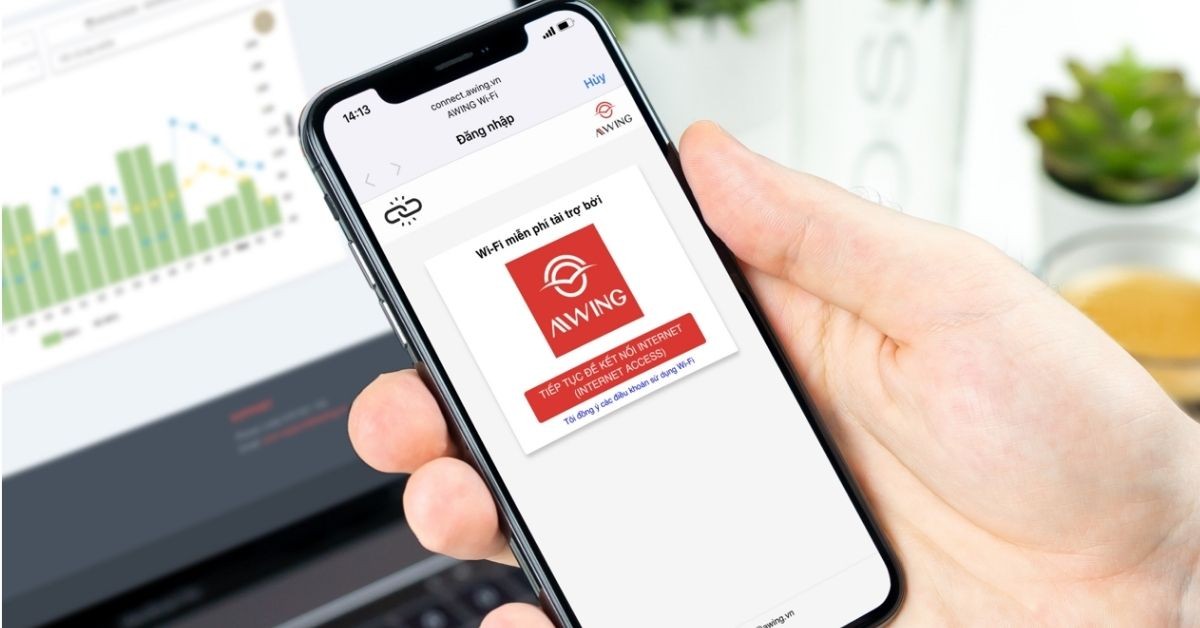
To access this resource on a large scale, AWING's idea is to take advantage of the free Wi-Fi system equipped by the "owner", AWING's technology platform allows displaying the most suitable advertisements to potential customers on the Wi-Fi login screen.
AWING is a typical example of this trend in Vietnam, successfully utilizing the sharing economy model for free Wi-Fi resources equipped at almost every consumer location, and creating a large network (AWING Network) with a scale of 20 million users, 6+ million interactions on advertising per month and spanning 48 provinces/cities (according to data on September 9, 2020). In particular, this service has been proving its great value and growing rapidly.
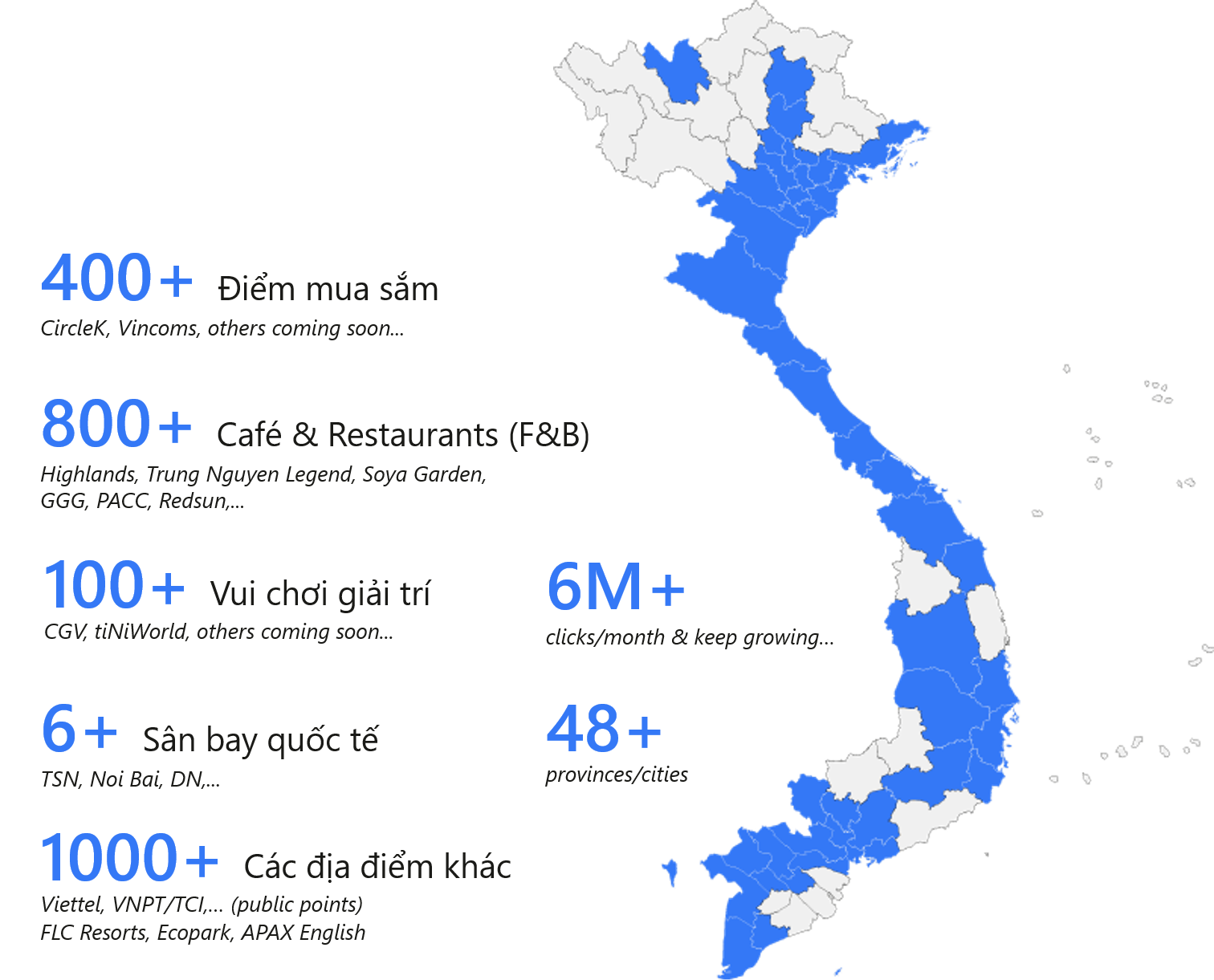
AWING Network (Data provided by AWING, September 9, 2020)
According to AWING’s survey, Vietnamese users are influenced by an average of more than 200 advertisements of all kinds in a day. For an advertiser, the most important factor is to make the brand image and product message stay in the consumer’s mind as long as possible.
To solve the above problem, advertising on the AWING Network platform is exclusively displayed in full screen when accessing Wi-Fi as a sponsorship (free Wi-Fi sponsored by the brand) to create interest, from which the following messages will be easily "absorbed" into the customer's mind. In particular, when having to interact with advertising content, such as clicking buttons, filling in text, swiping, ... throughout the advertising cycle to authenticate to the internet, users will have a deeper impression than with other forms of advertising.
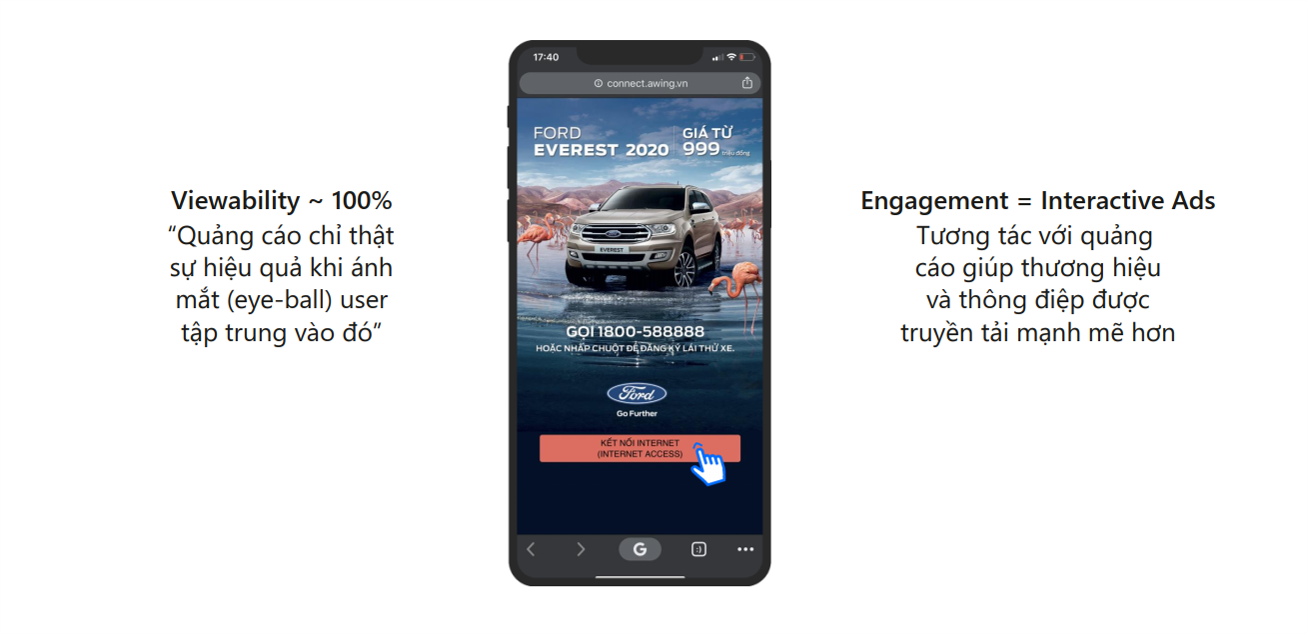
Features of AWING ADS
Nielsen's survey with AWING shows that:
90% loyal users, using on average more than 1 time/week
70+% said they were likely to remember the ad and learn about the product/service later
The display format is designed to be eye-catching and impressive, advertising on the AWING platform is not simply considered an "advertisement", for users, this is useful information when connected to a brand that suits their consumption habits.
Groups of users with specific behaviors in locations are the advertising target of the long-standing form of outdoor advertising (OOH - Out of Home) and occupy a large advertising budget of brands. Until the current digital age, OOH was mainly classic forms such as TV screens (LCD), outdoor/indoor billboards... although impressive but not capable of measuring effectiveness, such as the number of viewers or interactions with the advertisement.
In fact, “digitalizing” OOH (Digital OOH) is not easy and there is almost no outstanding available form. But with the appearance of smartphones and the preference for using free Wi-Fi when users have enough time at a specific location (about 1 hour), AWING can be considered a perfect solution to the Digital OOH problem.
Furthermore, AWING is a unique media channel, standing between Online and Offline; it can be considered an Online channel supported by Offline data; a Digital OOH channel, or Mobile LBM.
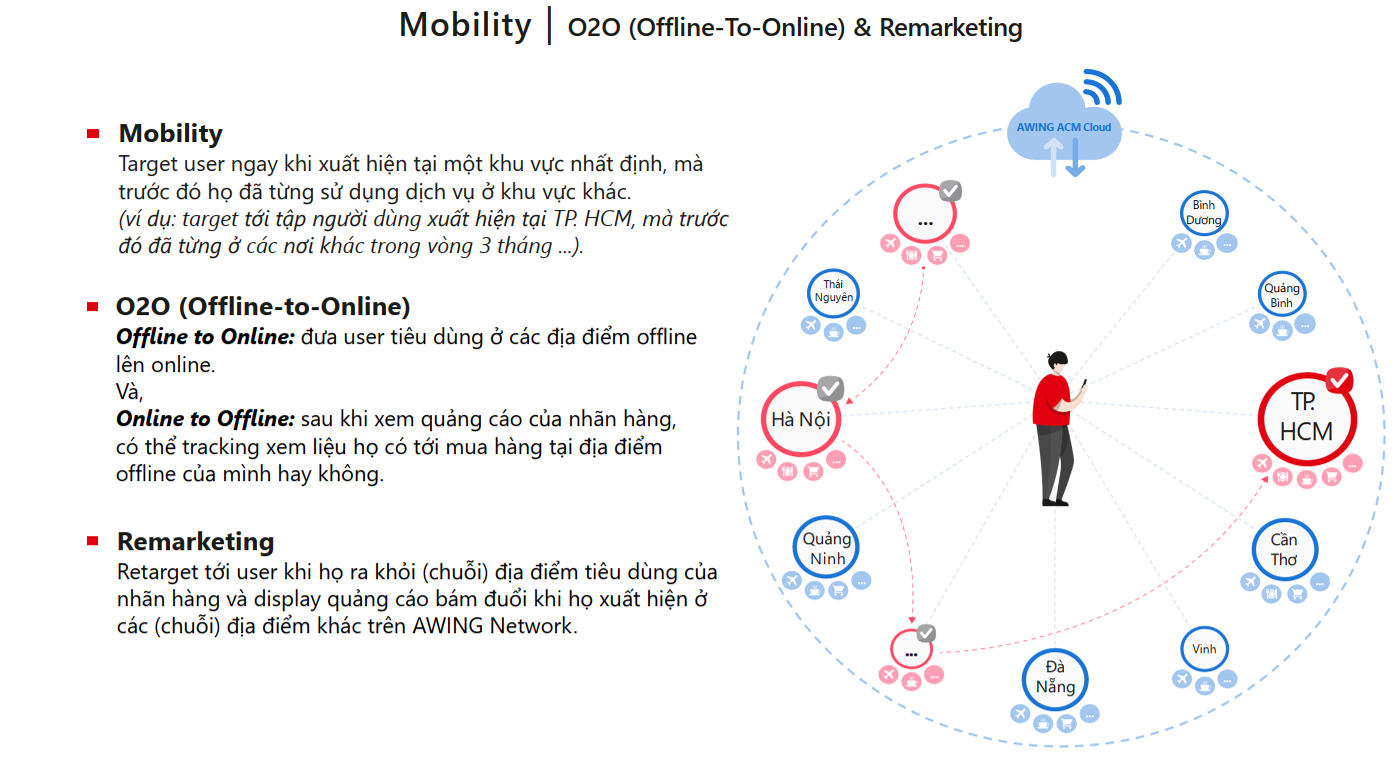
Unique O2O communication channel for brands
According to AWING's survey of a number of brands, users on AWING have an average overlap of about 30% compared to all other media channels in an advertising campaign including TV, OOH, Social (Facebook), Google, News, etc. Therefore, AWING should combine with other media channels to create a complete overall strategy.
AWING users have specific consumer behavior through consumption points, with an age group within the golden population age of Vietnam, of which 62% of customers spend a lot (1-5 million/1 shopping trip at the shopping mall - according to AWING survey).
In the AWING Network, the location chains cover most social activities, including (but not limited to):
Coffee & drinks: Highlands Coffee, Trung Nguyen Legend, E-coffee, Soya Garden, etc
Cuisine: SumoBBQ, Gogi House, Kichi Kichi, iSushi, Asima, ... (belonging to Golden Gate Group); King BBQ, Khao Lao, Hotspot BBQ, ... (belonging to Redsun); Al Fresco's, Pepperonis, Papa Joe's Coffee, Hot N' Tasty, Jackson's, Jaspas (AFG), Ba Gac Nuong Bia, etc
Entertainment & learning: CGV, Tiniworld, APAX, FLC, Ecopark, etc
Shopping: Vincom, Circle K etc
Airport
Services & finance: Vietinbank branches, etc.
Instead of using a lot of data (data footprint) to infer the user's spending ability online. AWING is an alternative approach by relying on consumer location to infer this behavior with high accuracy, in addition, it also segments users into the following groups (not limited to):
Business people, groups with large asset accumulation, groups that often move between regions
Offices and workgroups have high spending habits.
Parents with young children
Generation Z, students
Modern, tech-savy, trendsetter, etc
During the Wuhan pneumonia (Covid-19) outbreak, offline activities have had a huge impact on society and the economy. When social distancing was enforced, offline activities were banned, the economy stagnated, and online activities only helped to solve a small part of economic circulation activities. But surprisingly, the high-consumption class seemed to be almost unaffected, as traffic to AWING Network remained at a very high level after the quarantine, led by consumer behavior that was still as vibrant as before the outbreak.
AWING is a representative network of “real consumption” and can be considered an effective filter to help advertisers target real consumers. Taking advantage of this opportunity, many brands selling high-value items such as automobiles, real estate, education, beauty, etc. have increased their advertising budgets on AWING Network.
The user's consumption habits at the locations will be recorded by the AWING platform and advertisements with appropriate content will be allocated, according to the following criteria:
Spending ability (premium or standard)
Demographics (gender, age)
Geographic scope (by district, city/province, region)
Location Chain
And/or other information (device, language, browser, mobility, etc)
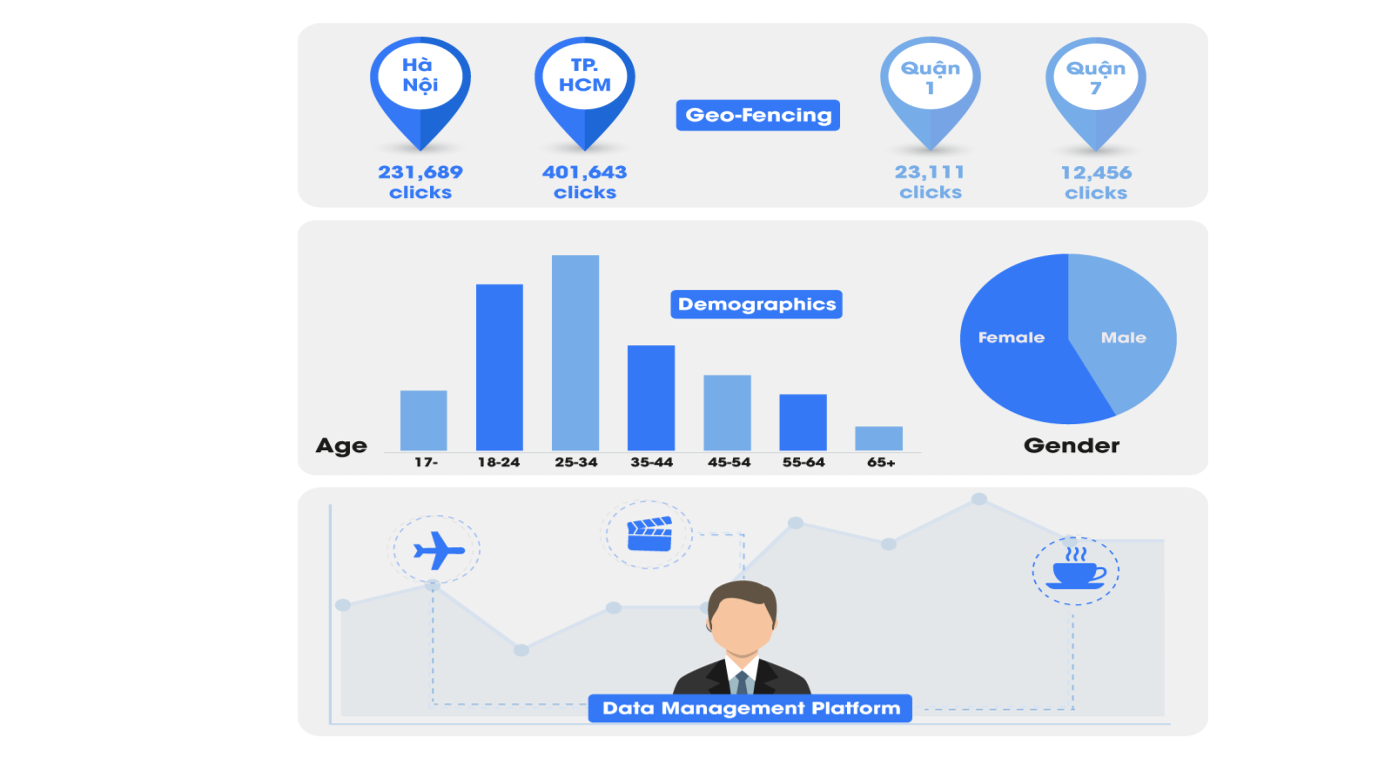
Allocate ads based on brand relevance criteria
Segmentation by location, targeting by leisure habits and using free Wi-Fi as a sponsorship, and positioning clearly segmented customers, AWING is a perfect solution (STP – Segmentation, Targeting, Positioning) for brand awareness and brand love.
Attracting users' eyes and aiming to solve the problem of defining customer segments, AWING has become a leading enterprise in the Digital Marketing advertising industry. Thinking of AWING is not only thinking of Wi-Fi Marketing but also mentioning a special digital marketing channel, between Online and Offline (O2O), Mobile LBM, Digital OOH that uses interactive methods to connect and build brand love with target customers!